James Kahn on Return of the Jedi, Indiana Jones, and Writing
Table of Contents
- Introduction
- About James Kahn
- Interview
- 1. Emergency medicine & novelizations
- 2. Landing the Temple of Doom book
- 3. Working with Spielberg & Lucas
- 4. Deeper character insights
- 5. Balancing fidelity & creativity
- 6. Challenges on Goonies & Poltergeist
- 7. Fan reception
- 8. TV writing vs. novels
- 9. Lessons from E.T.
- 10. Writing the memoir
- 11. Most proud work
- 12. Advice for writers
Introduction
This interview with author, screenwriter, and physician James Kahn was conducted via mail correspondence in October 2025. Presented below are his answers in full—verbatim—covering classic film novelizations, television writing, and a life spent telling stories across mediums.
Spotlight on James Kahn
Doctor, Novelist, World-Builder
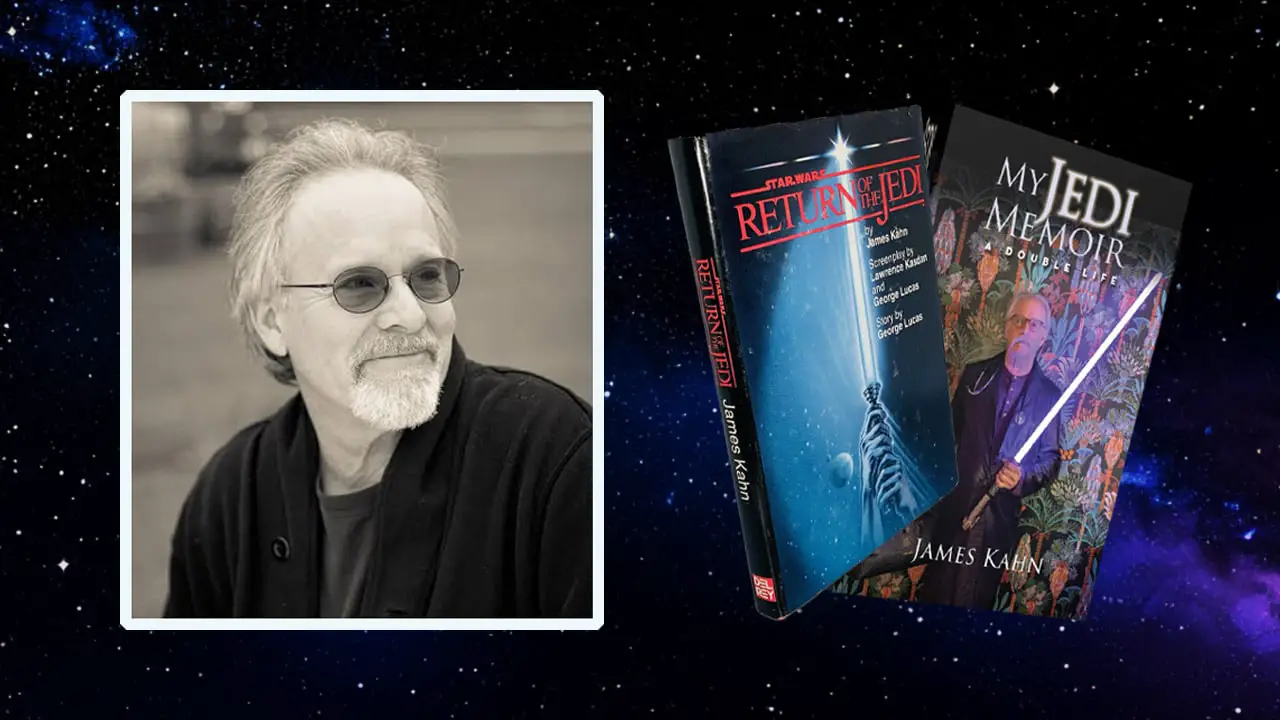
Chicago-born and ER-trained, James Kahn bridged medicine and storytelling to become one of the 1980s’ most influential movie novelists — notably writing the bestselling 1983 tie-in for Return of the Jedi, followed by novelizations of Indiana Jones and the Temple of Doom, The Goonies, and Poltergeist. :contentReference[oaicite:0]{index=0}
Original Fiction & Historical Epics
Beyond adaptations, Kahn authored the New World trilogy — World Enough, and Time, Time’s Dark Laughter, and Timefall — and later the Civil War border epic Matamoros, which he expanded into a cross-media project with music. :contentReference[oaicite:1]{index=1}
From Set Medic to Showrunner’s Chair
Kahn consulted as a medical advisor (and extra) on E.T. the Extra-Terrestrial, then moved into television writing and producing — from St. Elsewhere and Star Trek: The Next Generation/ Voyager to a multi-year run on Melrose Place, where he rose to co-executive producer. :contentReference[oaicite:2]{index=2}
Songs Between Stories
In recent years he’s released Americana/folk albums — beginning with Waterline — continuing his habit of telling character-driven stories, now in song. :contentReference[oaicite:3]{index=3}
Still Writing the Saga
Kahn’s 2025 memoir revisits the wild intersection of ER life, Hollywood writers’ rooms, and blockbuster novelizations, while ongoing interviews and podcasts trace his enduring influence on how fans experienced classic films on the page. :contentReference[oaicite:4]{index=4}
Interview with James Kahn
I always bring my medical background into my writing. For one thing it allows me to bring a sense of adrenaline into the action scenes. And in Poltergeist, for example, I specifically used a lot of my own material that wasn’t in the movie, based on ESP research I’d done in medical school.
By the time Indiana Jones and the Temple of Doom rolled around, I was already the go-to guy for Spielberg novelizations. He loved the Poltergeist novelization, so he recommended me to George Lucas to do ROTJ. After that, when Indy, and then Goonies came up, they just called and asked if I wanted to do it.
I had a couple meetings with Lucas when I started writing ROTJ. Asking him if I could write new material that wasn’t in the movie, as Spielberg had let me do for Poltergeist. He said we could visit that on a case by case basis, and there were some additional scenes I wrote that he cut, and others he let stay. I had contact only with Frank Marshall on the Indy movie. He was one of the producers, and Spielberg’s right-hand man.
Characters tend to tell me who they want to be. For example, it always felt to me that Uncle Owen and Obi Wan were brothers, so I wrote it that way, and developed a whole backstory in my mind about it – their father had wanted Obi Wan to run the farm, but he ran away to become a Jedi, after an acrimonious fight.
I just made sure my own creative elements were congruent with the feel of the films. Like the Owen/Obi Wan fight I just mentioned felt like it fit within my Owen was so negative about Obi Wan to Luke (“Stay away from that old hermit.”)
I decided I wanted to write The Goonies in first person, like Huckleberry Finn, or Treasure Island. It felt more intimate that way, and like the lead character was telling a true story. That was challenging because Mikey wasn’t in every scene, so I had to finesse how he knew to tell those parts of the story.
I’m always gratified when people tell me how much they like my work. That was especially true for Jedi and Goonies.
In novels, you’re allowed to get into the characters’ heads. What they’re thinking and feeling. In television you can only see what they’re saying or doing, so you have to give the dialogue subtext, to imply what they’re thinking.
I was an extra and medical advisor in ET’s resuscitation scene. Watching Spielberg direct Henry Thomas was amazing, the way he could get into the world of a 10 year old, and tell the story through the kid’s eyes.
My kids had been urging me for years to get all my stories down on paper, stories I’d been telling them all their lives. I’ve heard some stories about my grandparents escaping Russia at the turn of the century, and those always had me glued to my seat. So I wanted something for my own grandchildren to be able to read, and know me better after I’m gone.
I’m proud of all my novelizations. But the novel that took the most work, sweat and spirit, was one of my original novels, Matamoros – a historical romance adventure about a Mexican border town in 1863, full of spies, gunrunners, runaway slaves, Texas Rangers, Civil War deserters, and rogues of all sorts. You can check it out on Amazon
The secret to writing is writing, and to do it because you love to do it, not because you think you’re going to get rich and famous. I wrote for 20 years without even showing my writing to anyone except a few friends or teachers. When I finally started selling things, I couldn’t believe my luck. My career has been up and down, but even during the dry spells I write because I can’t not write. If you do it that way, and keep at it, you’ll get seen.
Share this:

Discover more from Tales From The Collection
Subscribe to get the latest posts sent to your email.