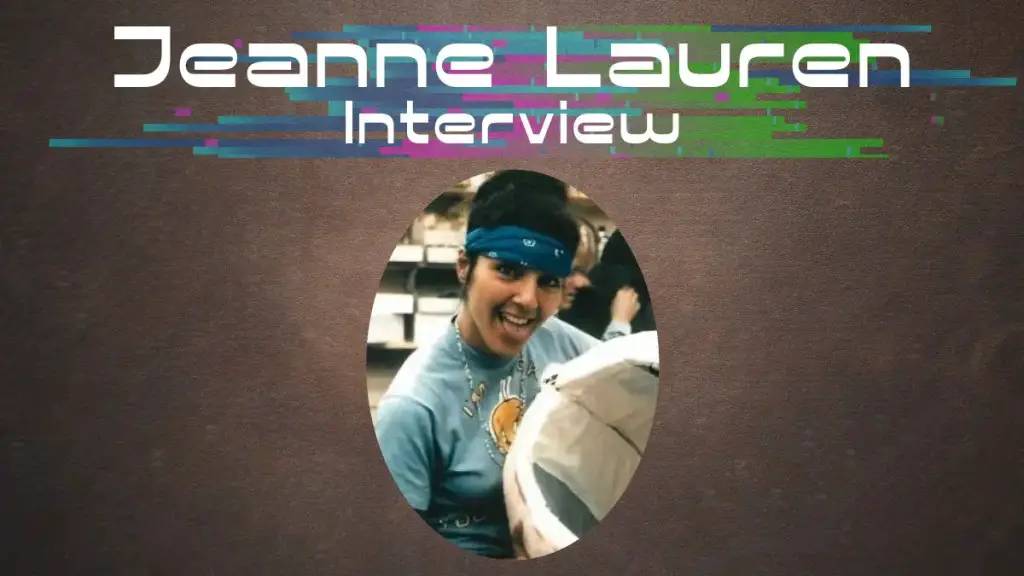
- About Jeanne Lauren
- How Jeanne Got Started at ILM
- Jeanne’s Familiarity with Star Wars
- Her Background in Puppetry and Dance
- Working on Costumes and Flexibility
- Life in the Creature Shop
- Materials Used at ILM
- Working with Maquettes and Scale Models
- Thoughts on Cosplay and Modern Costumes
- Carrie Fisher’s Iconic Performance
- Interactions with George Lucas
- Jeanne’s Future Projects and Reflections
This interview was conducted with Jeanne Lauren on 15August2024. Please note that the following is not verbatim, as edits were made for clarity and brevity. Jeanne provided unique insights into her work on the iconic “Star Wars” franchise, her experience as a puppeteer, and the evolution of practical effects in the industry.
About Jeanne Lauren
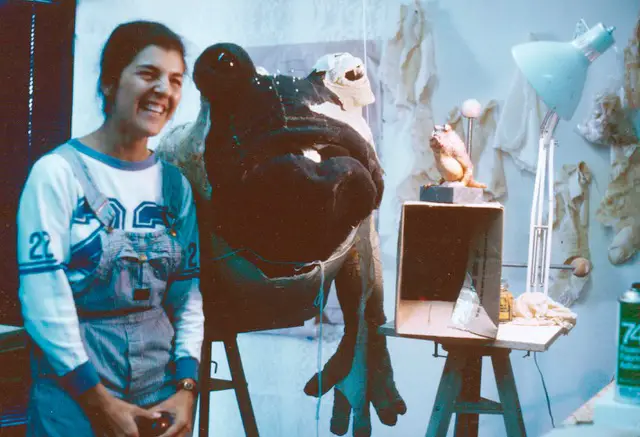
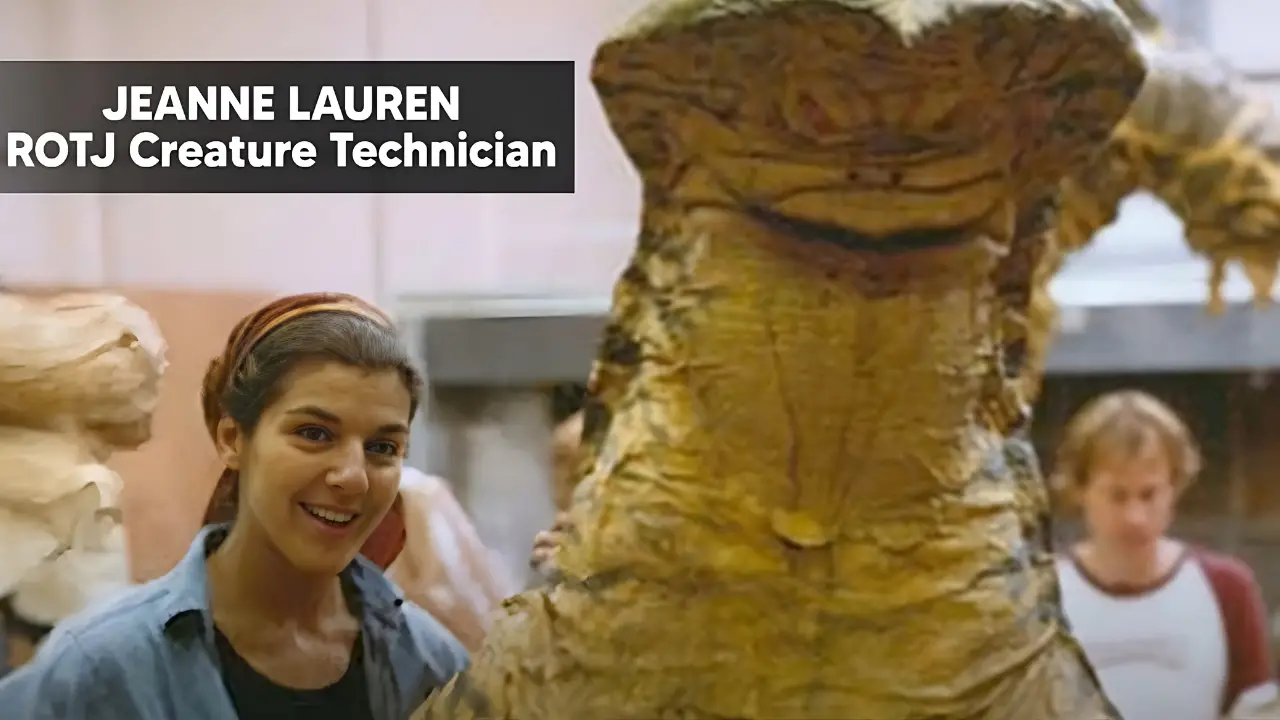
Jeanne Lauren is an accomplished puppeteer and creature creator who worked on the iconic Jabba’s Palace scenes in “Return of the Jedi.” With a background in dance and costume design, Jeanne brought unique skills to the ILM Creature Shop. Her hands-on approach, blending wardrobe work with creature building, made her a vital part of the production team, contributing to some of the most memorable characters and creatures in film history.
Jeanne’s journey into the world of puppetry and costumes began in the early stages of her career, crafting mascots and performing at various events. This skill set led her to the movie industry, where she contributed to numerous productions, most notably in the “Star Wars” franchise. Today, Jeanne reflects on her time at ILM and the art of practical effects with fondness and pride.
Interview with Jeanne Lauren: Behind the Scenes at ILM
How Jeanne Got Started at ILM
TFTC: Can you give us some background on your career at ILM, particularly when you were active and what projects you were involved in?
Jeanne Lauren: Well first of all, I don’t think I can remember the dates, but it was way back. It came out in 83, so whatever that was. It took a couple of years to do. The division that I was in at ILM was called the Creature Shop.
“I got a job with them working on the creatures for the Jabba’s Palace scenes… I was very lucky to get added to the scene.”
I got a job with them working on the creatures for the Jabba’s Palace scenes. When I got there, things were already in full motion. The models were already created and approved. The creature staff was pretty much full, and I was very lucky to get added to the scene basically.
I think we were maybe under a year or less away from taking all the creatures to England to start shooting.
Jeanne’s Familiarity with Star Wars
TFTC: By that time, Star Wars was already a phenomenon, so you were probably pretty well familiar with everything going on with the first two movies, right?
Jeanne Lauren: I pretty much came in fairly clueless to the Star Wars scene. I came in as a puppeteer, basically. My excitement and passion was to perform, to be a puppeteer. I didn’t care what I was performing.
“The creature shop was filled with what I call the ‘monster boys’… steeped in the Star Wars lore.”
It had been quite a few years from the first Star Wars and quite honestly, the creature shop was filled with what I call the “monster boys”, you know, drawing cartoons and they love monsters and and they just were steeped in the Star Wars lore and all, and everything from Ray Harryhausen, and Phil Tippett’s whole thing with all the creatures he did even before then.
His whole fascination with stop motion. This was the old days before digital.
I certainly knew it was a big deal, but I hadn’t followed the Star Wars lore per se.
Her Background in Puppetry and Dance
TFTC: You had a background in dance as well as puppetry. Did you actually have hands-on experience making the puppets before you got to ILM or was ILM your first introduction to making the puppets?
Jeanne Lauren: No, I had been working with puppets and dance and acting for maybe, seven or nine years before I even got a job with ILM.
I was fairly established in creature building, making mascots and costumes for corporations, doing puppet shows at corporate and civic events, and private parties.
And then dancing on stage. I was enamored of belly dancing and jazz and ballet. Then I did movie work.
The Streets of San Francisco was in town in those days. So I got my union card and Belly danced on a table for one scene in The Streets of San Francisco.
And I got a couple of little parts with a Clint Eastwood movie. Nothing major, but I still get a dollar or two every six months. I still get residuals. I love it.
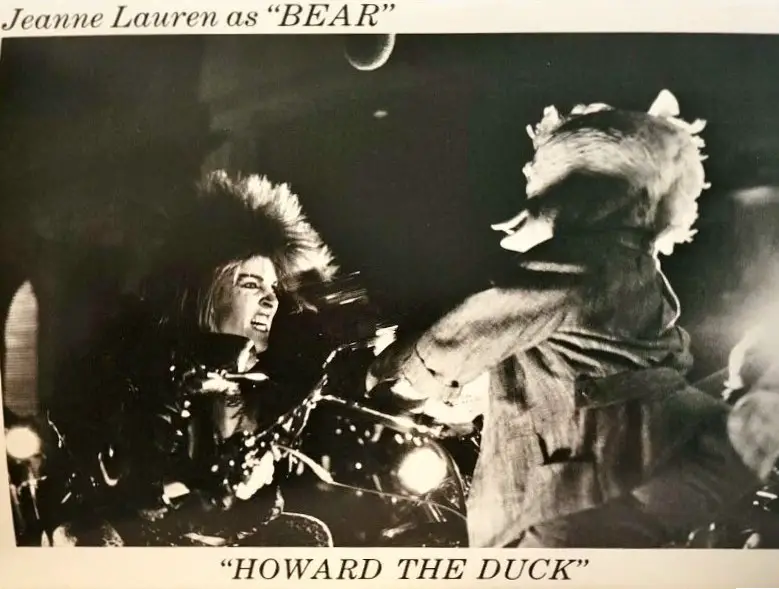
By the time I got to ILM, I came with a bag full of puppets, a couple of mascots, my belly dancing costumes. My experience as a seamstress, a dancer, and a puppeteer.
So that was a background that the Monster Boys didn’t have. They didn’t have somebody there that could bridge the wardrobe department with the rubber department.
Let’s put it that way, you know, the rubber and the foam. So I was that transition because I would get inside the costumes. I’d put my hand in them.
I would put my body in them. I would make them flex and move and stay flexible because when you build these things, they get stiffer and stiffer as you go along. So you want to keep them flexible.
Working on Costumes and Flexibility
TFTC: That’s kind of incredible that they weren’t doing that kind of thing already. How would you even make sure that the costume is functioning properly if you’re not even getting in there?
Jeanne Lauren: Well, I mean obviously they were, but then you talk to Anthony Daniels. I became his dresser for the second half of my stints on the movie and his costume got a lot more comfortable and a lot more flexible and a lot easier to get on and off by the time Jedi rolled around.
With the first one, I think he suffered quite a bit. Anthony will tell you.
In fact, one of the reasons why I got to be his dresser was because he saw me being so solicitous to our people in costumes. He says, “Hey, where’s my helper? Where’s my person? Who’s keeping an eye on me? Where’s my cup of tea? Where is somebody to blow some air in my mouth, you know, my costume?”
So, he kind of said, “Where are the guys taking care of me?” I mean, not that he wasn’t being well taken care of, but, you know, he’s a hothouse flower, Anthony Daniels.
TFTC: Yeah.
Jeanne Lauren: Funny guy.
TFTC: Yeah, I imagine it’s pretty difficult, we’ve heard stories of how difficult it was for Anthony Daniels and even Kenny Baker being trapped in his R2-D2 costume.
Jeanne Lauren: They used to be in the beginning, but I don’t know what they had before. I mean, look at Creature of the Black Lagoon. It was some kind of rubber suit. Remember that? I mean, oh my God, that was hilarious. It’s like some guy’s coming out of the swamp and you can see the seams around their neck and their fins.
You know, with creatures like that, you can tell there’s somebody in there.
TFTC: I guess when resolution wasn’t as good back then, you could get away with more.
Jeanne Lauren: Well, everything’s seamless now. But you can look at even TV commercials today and all of a sudden you see a puppet, but then you’ll see somebody in a costume.
They kind of bounce back and forth between the scale because I think it’s cheaper to put somebody in a costume than it is to do all the digital up to a point.
But who knows with the skill level how it is. It must be quite revolutionary now to generate an AI digital character.
The blinking eyes and the mouth moving and expressions.
Oh my gosh, the expressions they have now. It used to just be you were laying on the floor with a pair of cables, like bicycle cables, you know, like squishing them to make an eyebrow go up and down. And even then, that was a big deal.
TFTC: I’m curious about early on in your career. How did you get your start?
Jeanne Lauren: No, I was pretty self-propelled. I was pretty much all by myself, not working with anybody. I started—it’s just real stupid, but I put on shows in the backyard, you know, sheets for curtains and dancing and singing and charging admission. And then obviously you go to high school, you go to college.
And when I came from college, I went straight to California and being kind of bored, had nothing to do. I made some paper mache heads. You know, you stick your finger in, you paint them up, and you put bodies on them, and it became sort of the part of the Skyana Entertainment puppet world. But they were quite beautiful puppets.
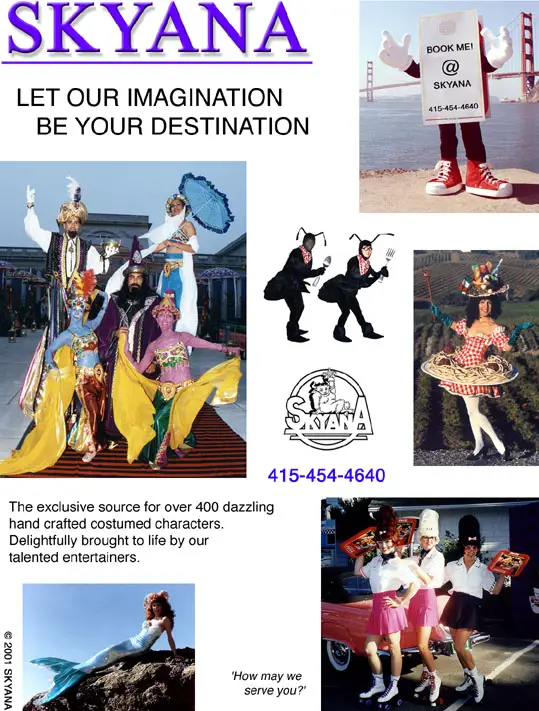
I mean, they’re not quite that primitive. But they weren’t anything like, you know, Marionettes or Cirque du Soleil stuff or Julie Taymor, you know, that level. It was just darn cute. Cute and functional and renaissance fairs and parties and this and that. But that’s how I started making costumes.
I started getting into the puppets, so to speak. That’s where it was really fun, getting into the mascots. I was a mascot for a soccer ball team. I was a mascot for a bank. It was a big piggy bank.
I was a mascot for a transportation company. There I was a pelican.
I would make these costumes, but with the proviso, hey, I want to get in them, you know, I was a sea serpent, and it was just so much fun, you know, and that’s where the money was.
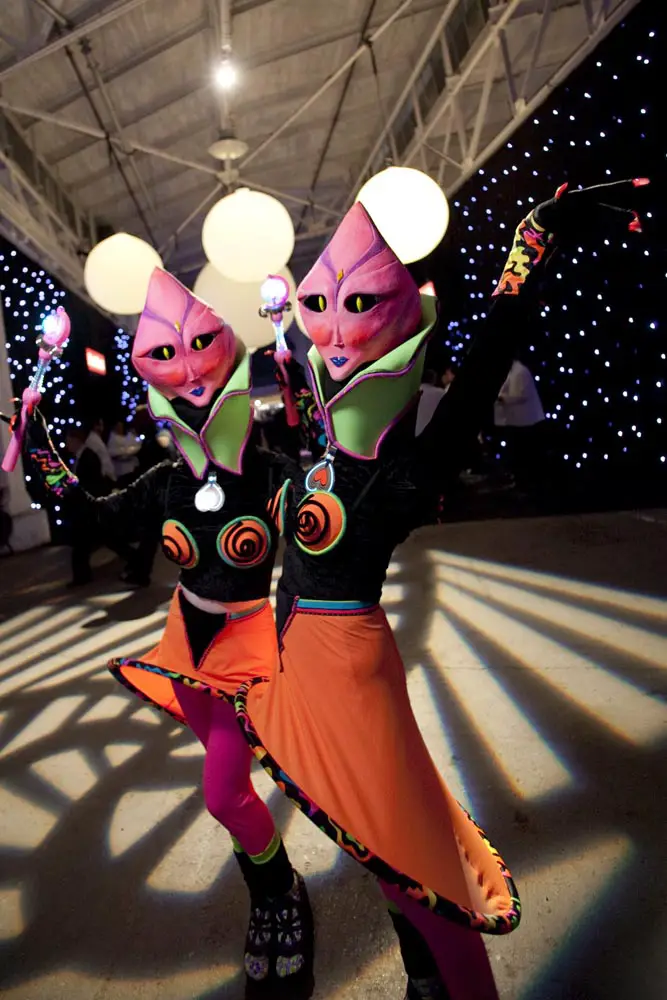
The money was in performing. You could spend a thousand hours building a frog foot or an arm or a finger or a blinking eye or something, but the money’s in performing and the fun is too. You’re all sweaty and young and healthy and it’s fun. And I had my own private company too, where I did a lot of iconic characters like Rudolph the Red-Nosed Reindeer and Frosty the Snowman and aliens and crazy giant hats with, you know, icons like Eiffel Tower hats and windmill hats, and I ended up having a corporate company.
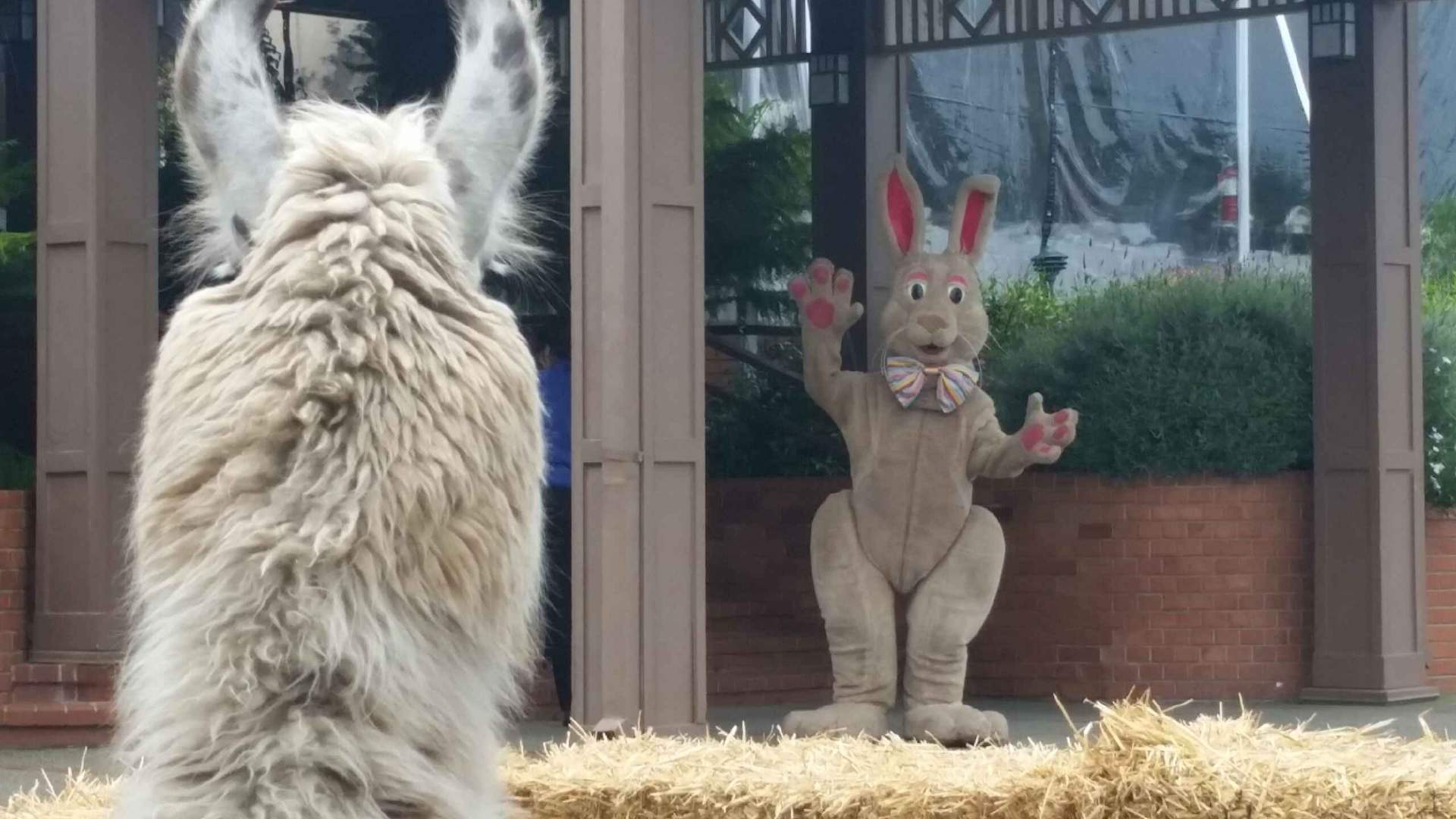
This is before Lucasfilm. A little bit before, no, after I got out of Lucasfilm, I moved more into the corporate arena more heavily. But before then I was building mascots for corporate companies and offering my services to get in them.
And that was what I was doing. That’s kind of what they liked about me at ILM, was the experience in the costumes.
TFTC: I imagine a lot of these are pretty big and would take up a lot of space. What happens to these costumes when they have lived their purpose? Do they stick around, do they get sold off? What happens to all those things?
Jeanne Lauren: That’s the question of the century. I have 2,000 square feet down the street from me in a warehouse, you know, my workshop, and I don’t know what to do with them. They’re so beautiful and they’re all handmade and I’m having trouble just selling them for 50 bucks cause somebody will put them on and just wreck them.
You know, you can’t rent them because they’re, too quality. They’re not rentals. You can’t throw them in a washing machine and clean them. Wash them after every use. So they’re not that kind where you go to a costume shop and you can rent a tiger costume. They’re not like that.
They’re more complicated and they have more moving parts and they’re beautiful. My slogan used to be “cartoons come to life.” So these things, as you’re building them, you just sort of imbue a life into them. They, don’t wait for somebody to get into them.
They look alive just sitting there. Hanging from your living room ceiling, which is pretty much what my studio was in the beginning, just my living room ceiling, like many artists.
So yeah, I have thousands of parts and hundreds of costumes and I don’t know what to do with them. So that keeps me up at night. I’m just not going to throw them away and I’m not going to give them away yet.
I don’t know what to do with them. If you know of anyone who wants to buy a full costume shop, let me know.
Including gorgeous dresses and candy cane kings and a giant picnic ant. Just fun corporate family entertainment characters. Now in terms of Lucasfilm costumes, obviously those all go into archives.
You know, they’re all stored away somewhere in big boxes. My stuff, I don’t know. I don’t know what’s going to happen to it.
The foam breaks down. The polyfoam that you build all these costumes with turns to sand like an old car seat. You know, after a while, I mean, it has a half-life. The foam that you build all these things with has a half-life.
TFTC: I’ve seen pictures online of costumes that they used for the 1990s Teenage Mutant Ninja Turtle costumes and how badly those have deteriorated and they just look scary or some of the costumes from the Super Mario Brothers live action film.
Jeanne Lauren: Well, I got to go walk through the set where Ronald McDonald did their TV commercials and it’s all polyfoam, but they spray them with paint and stuff.
Mine are all covered with fabric. It’s a little bit different when you add chemicals to polyfoam, uh, like spray paint and junk and glue and hot glue and stuff like that. But, that that’s the nature of polyfoam.
Materials Used at ILM
TFTC: Were you working with materials that you could find at a hobby shop that were more or less off the shelf? What was it like when you went to a professional studio like ILM and you have all manner of materials and tools at your disposal? Did that elevate your craft in some way or change how you did things?
Jeanne Lauren: I got more specialized in the materials that I was using because my job was more specific.
At my studio, I start from A and go all the way to Z. So I need fabrics and glue and sewing and wire and everything. But at ILM, it was a little bit different because my job was more specific to skinning the character and shaping the foam. Creating straps and support systems inside the costumes so you can get in and out of them and wear them comfortably.
There was a lot to do, and a lot of people had their niche, if you will. Some of the creatures were completely sculpted and then molded, like some of the smaller things were done in clay, then they were molded, and then they were put over an armature. Other things like mine, like the pig guards, for instance—the Gamorrean guards who we called pig guards because of their noses.
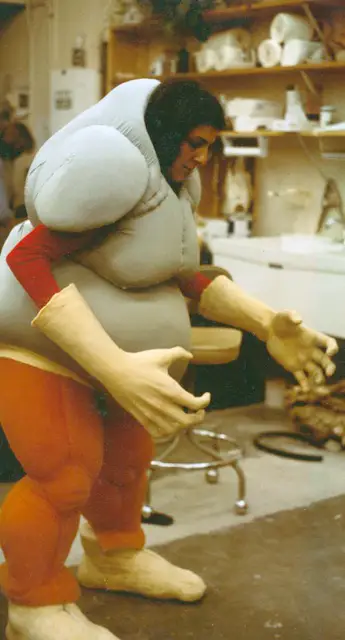
Um, they were from the neck to the feet, not counting the hands and the head, complete polyfoam sculpt, uh, polyfoam characters. So, Tony McVey is just a master of musculature. I was just fascinated to watch him. He would just, take a big giant piece of the special foam we use and with an electric turkey carving knife he would slice it up this way and that way, and this way and that way. Glue it together. And you’d have a bicep or a chest piece.
Then my job would be to put the elbow to the forearm, put the shoulder to the torso, you know, to secure it all and put it together.
Meanwhile, the face, the pig, the Gamorrean guard face is being sculpted by maybe Phil Tippet or one of the other artists there.
That whole thing would just come out of the mold, the whole head, and then you’d be picking the stuff out of the center of it.
I forgot about that. So some things we were doing, we’d get these solid blocks of foam, like for a head and then our job was to pick out the inside, so a human head could go inside. Then we’d cut holes for the eyes and all that.
So it was very interesting that there are different foams. There were SRAM foam, there was regular sheet foam, polyfoam, like mattress foam and stuff like that.
I don’t know what that other stuff was. It wasn’t SRAM. It was a heavy. They pour it into a mold and it comes out kind of a hard foam and they could just spray it, but we had to pluck out all the guts of it. So otherwise you couldn’t put your head in it.
TFTC: So probably all stuff that you were already pretty well familiar with, it sounds like.
Jeanne Lauren: I was, but I never skinned anything before, so that was all new.
They would give you a big, not a big sheet of skin, but let’s say something, 24 inches by, 30 inches or smaller, even half that size.
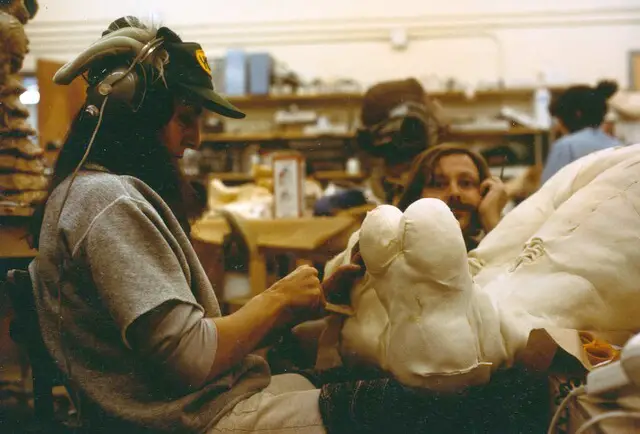
I had them all stuck with thumbtacks to a wall. And then I would take little bits and pieces of them. Like, Oh, I’ll put that over the kneecap or that wrinkly part there looks good. I’ll put that under the throat or I’ll cover the ear with that. And then you have a little tool that you dip into a latex and use as glue. After you glue it down, you still have all these rough edges that you trim.
“Phil Tippett, you know, the master, he’d come in and say, ‘Jeannie, open your eyes… that’s all you’re going to see it on screen.'”
It was very tedious, but fun. Um, and then you had to seam with the latex, that white latexy junk, you had to like run it along the seam so it looked like it was one continuous piece of skin. And some things you’d put on and you’d kind of squish it a little bit to make it look more wrinkly.
It was very different and it was time consuming. Phil would come in and Phil Tippett, you know, the master, he’d come in and say, Jeannie, open your eyes. Look at it. Close your eyes. Open your eyes again. That’s all you’re going to see it on screen.
Finish it. Finish it. He was losing his hair. And then we made it into a joke.
TFTC: You were being a perfectionist huh?
Jeanne Lauren: I mean, how else? There’s no other way to work. You close the seam and then they’re going to spray it with paint and la la la la. They liked my work, I think. I worked as fast as I could.
Life in the Creature Shop
TFTC: I know every day is different with its own challenges, and it was a long time ago, but as best as you can remember, what would a typical day on the job working at ILM be like?
Jeanne Lauren: Well, the average days were just, you know, get up, go to work, be dark, and, you know, get in there and you’d have your own little pile of mess. Nobody would mess with it. This is your little spot. All your junk is there and all your shavings and skins and whatever your scissors, whatever you left on the floor the day before on the table, was still laying there. And then sometimes on Fridays we’d clean up. We’d sweep and clean up and everybody put their tools away, start over on Monday.
We’d get paid. Pizza would show up. That was always fun. And sometimes, uh, the show and tell would happen, and George Lucas and the crew and Jon Berg, would come by. They’d come through and do little evaluations. I guess probably they were bringing the producers by to show the progress.
So there’d be a little dog and pony show. We’d march through the studio. It wasn’t a big room. It was only a couple, two, three rooms. They would come through and we’d see the progress. Every couple of weeks that would happen. That was kind of exciting. And sometimes we’d get to go to free screenings for movies that were coming out. You know, they had a screening room somewhere.
It was very nice, you know, just get the job done. Then there was always kind of a little.. jostling for position. There was always that going on.
Because some people were a little higher on the food chain and I was pretty low on the food chain. But I said to him, you know, I’m single. I don’t have any children. I don’t have any pets, nothing, whatever it is. If you need me, I’m available, you know, to like carry on. And it turns out in the end, after things settled down and I was kind of off, they needed me. Like if somebody got sick or somebody else didn’t work out.
I said, I have a passport, blah, blah, blah, blah. And boom. Next thing you know, I’m in London with the crew. I was thrilled to death. Oh my God. That was the cool thing.
Otherwise, you know, you kind of get spit out at the end of a film. That’s true of every film, you know, your family and then boom, what’s next?
Marin County had no, “what’s next.” There was no next in Marin County. If you’re in LA it would’ve been different. LA, there might be something next. You could say, oh, I worked for, you know, parlay, your last job, and look for another job. But, uh, Chris Walas was around doing a few things. But, there was nothing after that.
And, so boom, I’m in England. And that was so cool. Oh, my God. That was really fun. Got to go right on set. And you’ve probably seen some of the pictures of that. It’s, you know, it’s well documented.
Working with Maquettes and Scale Models
TFTC: When you’re first starting out with a creature, what exactly did they give you to base the design off of?
Jeanne Lauren: They give you—and this has been true my whole career of everything I’ve done—they give you a three dimensional model, it’s called the maquette. It can be three, four or five inches tall. They give you a little maquette, and it’s in three dimensions, you turn it right and left and look at it and underneath it, and they give you a pile of foam. Thank God for Tony, he would get me started on the shapes, and the boys would bring me the skin, and that’s pretty much all I got. In fact, that’s what all anybody got, I think.
All these little maquettes were all done. I’m sure they did a whole bunch of them. And then George would say, I like that one, I like that one. Let’s do that one, that one. Give them names. And that’s all what anybody had. Everybody had a little maquette in front of them that they were working on.
Phil and the sculptors would make these little maquettes. And then they’d hand them off to us, the creature techs, to turn them into three dimensions you know, bring them up to scale and put somebody in them.
Some things were meant to stay small, but some of the ones I worked on were for people to get into.
Thoughts on Cosplay and Modern Costumes
TFTC: How familiar are you with cosplayers and that whole hobby and culture?
Jeanne Lauren: Oh, yeah, if somebody said to me today, Oh, here’s a picture, I want you to build this costume. I wouldn’t do it, number one. It’s exhausting. But, I mean, I’d start at $10,000 or $15,000. I mean, my stuff, when I was working with Brian Turner, who was also an alumni of the Creature Shop, brilliant guy who’s passed away–God bless–and Dan Howard, another brilliant, wonderful, wonderful person who also was a creature tech and ILM employee and he passed away.
But when I started doing corporate stuff, you know, somebody says “Oh, I need this kind of thing” it starts very expensive because there’s no way I can make a lesser quality, you know? I just don’t know how to make something badly. Let’s put it that way.
So I have learned to value my skills highly because I don’t think many people do what I do. They don’t do it anymore. Nobody does it anymore Nobody builds. I mean they may in the the comic con concept, you’ll see some people show up with some wonderful costumes, you know I see it on tv and stuff like that. They really go all out and Burning Man and all that.
But I don’t know. My stuff It’s always been of the quality that you could go up to it with a magnifying glass and you won’t see a thread. We don’t use any glue. All the fur is perfectly blended. It’s just a different skill level.
TFTC: Yeah, with Star Wars and fur blending. When I think of that, I just think automatically of Chewbacca.
Jeanne Lauren: Well, that’s just like wig making. I’m pretty sure that was all a suit. You know how people make wigs where they do through-the-netting and then pull the hair through and they bring it out again? That was all it was.
TFTC: So it was basically a giant wig for a costume?
Jeanne Lauren: Yeah. It was like a giant wig. I didn’t have any part of that and I don’t think I’ve seen one up close.
I’ve seen him up close–Peter Mayhew–we kind of, you know, hung out a little bit together in Yuma, Arizona, but I didn’t look at that suit really close. I was pretty busy doing what I was doing, but I can almost guarantee you that it was just like they would do a wig.
People who know how to do wigs can do it really fairly quickly, pretty fast. They can cover a section of netting really fast. You get two or three ladies doing that on a suit. It’s pretty durable, so I’m sure they use those suits quite a bit. Maybe there’s a way where they can take out the inside and wash it and then put it back on and put the suit over the, the inner body, cause on the set, you know, you gotta wash everything.
Everything has to be completely washed and cleaned every night on a union set. Fur blending is a little bit different when I say fur blending, I mean, I take two pieces of fake fur, and I sew them together, but you can’t tell how I did it. You know, cause it just takes longer to do it properly.
The wig making, I’ve never made any wigs or mustaches or any of that. It’s always seemed kind of interesting, but I never got into that one.
TFTC: Interesting. You did mention the Monday pizza parties. How was the esprit de corps, and what was it like after working hours? Were there any office parties or social gatherings that you guys would enjoy together as a shop at ILM?
Jeanne Lauren: You know, I think I’m gonna say no, but that’s just me because I don’t know. There were only a couple of girls there and so I think our interests pretty much diverged–very divergent interests from my interest to the monster boys so to speak.
Maybe they hung out and had a beer and, you know, talked monsters and maybe I went home. But we did get some fun parties and got some swag. We’d get fun swag. I have, Return of the Jedi posters when it was still revenge, and different memorabilia.
That’s, I guess, valuable. Now I haven’t figured out what to do with any of that, but there are some wonderful posters from Jedi, and I have some from Empire, and they would give us these presents, you know. Some of them are autographed, and this and that, from Dark Crystal, different things like that.
“We’d get swag. Ewok hats, and little toys and stuff… but I do have some stuff.”
So, we’d get swag. Ewok hats, and little toys and stuff, you know. Obviously, I didn’t keep it all. I didn’t know enough to keep everything in a box, but I do have some stuff.
In fact, I was watching Unfrosted, the Pop-Tart movie. It was a retro set and they have all kinds of mascots, and then they had this one guy come out with a Jerry Mahoney ventriloquist dummy, you know, doing something or other.
And I go, “Oh my God, I got that!” I still have mine in a box. I’ve got a Jerry Mahoney. Cause I took it to school and put it on a show. I mean, I was such a little show-off. I was a little showbiz kid way back when it was funny.
TFTC: Is that kind of what sparked your initial interest in that? Getting that, was that getting that early puppet? Was that kind of your foot in the doorway, so to speak?
Jeanne Lauren: It’s funny. I’ve always kind of hidden behind something when performing. Either I have a puppet on my hand or I’m in a costume or, you know, I always think that I want to show myself, but I only do it through camouflage or through an intermediary, if you will. So here I am doing the Jerry Mahoney, you know, the puppet on my lap in grammar school.
It’s pretty funny. And same thing with the puppets, and same thing getting into all these costumes, things I do, you know, can be quite dynamic. I guess most, like a lot of actors and actresses, they’re kind of shy in some ways, you know? We want to be seen, but we’re shy. I’ve had the privilege of hiding out in a gorilla suit or whatever, you know?
I think I started early by manipulating objects. And bringing them to life. Whether it was the food on my plate, or it was these puppets. It’s always been a way of expressing myself indirectly. Whereas other people, who knows.
They play instruments, or they do this, or they do that. But I’ve definitely always been very creative. I’m not mathematical–I have a good mind–but I’m definitely more interested in showbiz.
TFTC: How has your experience with the Star Wars fandom been?
Jeanne Lauren: I get envelopes and people write. It’s really cute. You know, I get a handful every month and I send it back with “thank you,” and it’s fun because it’s no big deal. I’ve been paid to do autographs, too, which was fun, too.
But, I’m such a small cog in a big wheel, just a teeny little cog, but I’m still alive. One of the living ones, I guess. I think some people have passed away.
TFTC: Oh, certainly. Yeah, I mean, unfortunately, more and more now. A lot of the original Star Wars actors and people who contributed to the production are passing away, unfortunately.
“Carrie was so brilliant and funny… In her evolution as a woman, she became so funny.”
Jeanne Lauren: Gosh. Yeah. Carrie. She was so, so brilliant and funny. Oh my God. She’s funny.
Carrie Fisher’s Iconic Performance
TFTC: Speaking of Carrie, you saw her perform on the set, right?
Jeanne Lauren: I saw her little costume. It was like so tiny. The one with the chain around her neck–you know where they had her in a little slave outfit?
TFTC: Yeah, what an incredible scene to witness! One of the most iconic costumes in Hollywood history for sure.
Jeanne Lauren: She was so tiny then, you know, and then you see her later, how she, her body changed, how she changed, but she was funny. A funny writer. In her evolution as a woman, she became so funny, you know, it’s her writing Postcards From The Edge and stuff, just a wonderful piece of work.
TFTC: One of her famous quotes goes like “Boba Fett could see all the way to Florida,” referencing how he was standing behind her and could just see everything. Was she pretty at ease on set or how was she wearing that skimpy revealing costume?
Jeanne Lauren: You know, they bring her out and they take her back and, you know, she’s had a robe on and she’s in a little costume and the wardrobe people, they’re very careful with her. The scenes are what they are. They don’t last forever and I guess she was a little hellraiser too.
I think there were some rumors on the set of her having fun somewhere behind the scenes, doing things that kept her skinny and kept her thin.
TFTC: I think I can read between the lines there.
Jeanne Lauren: Yeah. There were rumors but, you know, you’re kind of at a distance with these things and when you look at the pictures, you know, there’s a hundred people on the set, you know, you’re way in the background doing whatever I’m doing.
I’m not in front holding a light or something like that. I’m not right behind the camera. So it’s very different. I didn’t interact with her at all, but she seemed very nice and just, you know, she had that little scene with that costume was very fun.
Interactions with George Lucas
TFTC: Speaking of some of the bigger names on the production. You said George Lucas kind of toured your shop before. You guys showed him some of your work you were doing. How was he, what was your interaction with him like?
“He’s very quiet, soft-spoken… a very quiet, thoughtful person.”
Jeanne Lauren: You know, he’s very quiet, soft spoken. He had his little crew that would come through, and they look at stuff. You see him on documentaries, and you can see he’s not gregarious. He’s a very quiet, thoughtful person. You keep your nose down, you know, you kind of pose a little bit for the cameras, but you’re just doing your job basically and here they come.
Like, “Oh, George’s coming through or Jon Berg’s coming, Howard Kazanjian is coming or Jim Bloom. They’re coming through so everybody, you know, just behave yourself, that’s all. They just let us know they’re coming.
It was a dog and pony show, then “alright, everybody back to work.”
TFTC: I imagine it’d be easier for you to keep your cool since you weren’t a mega-fan going into it.
Jeanne Lauren: I had no idea really. I remember seeing the first Star Wars and thinking, “What are those guys doing on that thing? I don’t know what that sand and that robot and that, I mean, what was that?”
I didn’t have a clue what the first movie was about. I remember seeing one canoe, and that was it. And I remember the scene and that thing across the sand, you know, the dune buggy thing, the sand bug.
That was it. I go, “Okay, well, alright,” and then five or six years later or so, I’m working on a movie.
I was just interested in working on movies. I was just thrilled to be working on a movie, hoping that I would actually get to operate some puppets on screen.
TFTC: So what was it like then for you when Return of the Jedi actually came out in theaters and you got to see your work on screen and your name in the credits?
Jeanne Lauren: It was fun. There’s a lot of credits on films these days, you know, they go rolling on forever and ever. And like Phil says, “Open your eyes, close your eyes, open your eyes. That’s all you’re going to see it.” That’s all we saw. But it was fun to see the scenes, you know, where we were in Arizona and the Ewok stuff and everything.
So it was a very successful movie and very fun and I got to be a small part of it. It’s such a big–every movie is such a big project, such a team effort.
And then I’m, I don’t want to say kicked out, but I’m done and boom, off to my, you know, wondering what am I going to do next. The movies only last so long.
TFTC: With the exception of Return of the Jedi, I mean, while the production doesn’t last long, people are never going to forget its impact.
Jeanne Lauren: That’s true. I’m glad people enjoy it.
TFTC: Did you have friends and family back then that you just blew their mind when you told them what you were working on?
Jeanne Lauren: No. People now get more of a kick out of it. I go, “I worked on…” you know, I kind of brag about it now.
But I think I wasn’t aware of how exciting it was. How people would just kill to get that job, kill and to work in that thing that I just took on. I think a lot of times when you do stuff, you don’t realize at the time the impact it’s gonna have, the longevity of it.
Most people, even who worked on the first ones, never thought it would last this long. I mean, they just don’t. You never know what’s gonna happen. That’s true of all films and all artistic endeavors. You just never know if something’s gonna hit or if it’s gonna endure or is it going to be crap? Pardon my French.
TFTC: The films have such longevity, and the characters have been made into cups, figures, and Christmas ornaments. Do you have a favorite Droopy McCool piece of memorabilia or toy?
Jeanne Lauren: I love my Yoda hat. I have a Yoda hat, it’s my favorite.
It’s a little hat with the ears. That’s my favorite thing. And of course I like the posters, but I wasn’t a monster girl. I wasn’t into the toys. I didn’t understand the value of it at the time.
I just enjoyed the creativity. I enjoyed making them. I enjoyed being part of the crew because normally I work alone. I enjoyed being part of the camaraderie and the teamwork and something bigger and knowing I’m working on a movie–and not just any movie–but a good movie.
There’s a lot of movies you can work on that are just not worth it. They don’t go very far. Nowadays some don’t even make it to the big screen.
TFTC: For my part, I have a Droopy McCool Hallmark ornament that goes on my Christmas tree every year along with the rest of the Jabba’s Palace Band.
Jeanne Lauren: I did that autograph thing with Droopy.
TFTC: Someone reproduced the maquettes of him?
Jeanne Lauren: Yeah, there’s a company called, Regal Robots and they reproduce him beautifully and as accurately as anybody could.
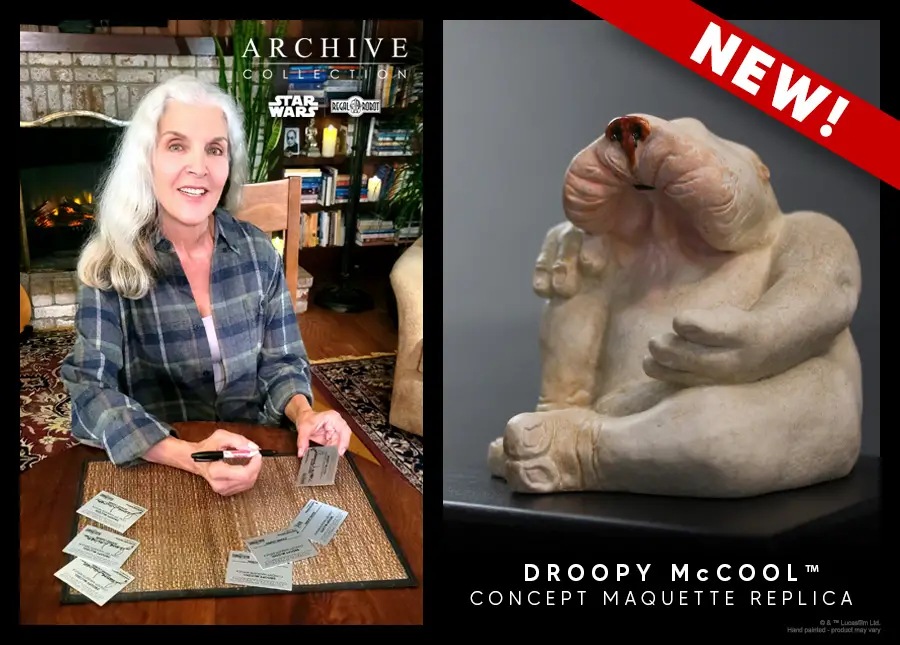
They work commercially and they do limited editions of these products. Regal Robots reached out to some of the creature technicians like myself and Phil Tippett and Judy Elkins and different people and said “oh you worked on this particular maquette We’re going to reproduce this three, six, or eight inch maquette and send it to you and you’re gonna autograph it for us and then send it back and we’re gonna offer them. Maybe a hundred of them or two hundred of them on the open market, you know, whoever wants to buy them.”
So I had the opportunity to sign autographs on Droopy McCool, because that was one of the characters I did a lot of work on. So it was very fun, and people do collect those things and they do a beautiful job with them. They’re hand painted and everything. They look just like the ones that were sitting on the shelf.
TFTC: You mentioned you’ve done signings. Was that the only private signing you’ve done or have you done a convention too?
Jeanne Lauren: No, I’ve never been asked to do a convention. It would be fun. But, I have people who have come a couple of times come to the house with a pile of memorabilia that they want signed. They make a business out of helping other people get to some of the people that I don’t even know how to get to, you know.
I mean, not George Lucas, of course, but some of the uppity ups, John Berg and people like that, sign things. Sometimes I get something and I’ll look at it and say “oh my gosh, look at that. You got five or six autographs from some of these other people. Pretty cool. Good job.” You know?
TFTC: Yeah. I think you should make yourself known to some of the local convention organizers.
Jeanne Lauren: Yeah, it would be fun. I just don’t think I’m important. But, I mean, sooner or later, who knows? Maybe somebody will figure it out anyway.
TFTC: I think you’d be surprised how many people would be interested.
Jeanne Lauren: If someone wants to send me to LA or something, that’d be fun to go to LA and sit there and do autographs. I would enjoy that very much.
Being a little bit of a ham bone that I am, when, when the photographers did come to the creature shop, I was fairly–let me put it this way–I didn’t turn my back to the photographers when they showed up for the dog and pony shows. I kind of turned sideways a little bit and then kind of held up the thing I was working on.
There’s quite an array of very cool photographs of me personally working on stuff at the creature shop. I’m thrilled. They’re just some darling pictures of me working on different characters.
One with my Yoda hat on and one working on Bubo and Droopy. Just in working with Tony, just different things, pictures of me with George, pictures of me on the set. People send those to me and say, “hey, can you sign those?” and I will. So I don’t know if all the other people at the Creature Shop are quite as inventive when the cameras showed up.
When Disney did that special Light & Magic, I got a feature on that. I’m in the commercial and I’m also featured in the thing a little bit because the camera showed up.
There’s Jeanne. “Here, let me try this. Let me show you this.” It’s like the show off, you know, “here, let me put a puppet on my hand and show you what I’m doing.” So I got a little notice. That was kind of cute.
TFTC: Yeah. I’m sure. You were probably one of… How many women were in the shop at the time?
Jeanne Lauren: There was Patty who was sort of an administrative liaison between Phil and the creature shop and the producers, and then there were two of us, Judy Elkins and myself, as far as I can remember.
Judy’s a wonderful sculptor. They gave her a lump of clay and she turned these little six inch things into like 12 or 14 or 15 inch things, you know, she’ll do a mask. She was very talented.
Jeanne’s Future Projects and Reflections
TFTC: So what nowadays, what are you working on?
Jeanne Lauren: Well, I stay awake at night trying to figure out what I’m going to do with those costumes that I own. I don’t know what I’m going to do with all that stuff. I’m kind of retired, so I don’t even want to sew a button.
I have my fantasies about things, but, I just need to–I’m older now, so I need to sort of free myself from the clutter.
I practice guitar and I go to yoga. I try and figure out what to do with things and I’m wondering if there’s another chapter for me somewhere in the world. I haven’t quite closed the book yet.
I study Buddhism. So I’m just not quite sure, you know. Where my life is going. I know where it’s going. It’s going to the end. What am I going to do between now and the next 10 years or so? I just think, you know, it’s just a ticking clock. I don’t know.
But I’m still kicking, you know, still getting on ladders and cleaning up the gutters. I’m a hard worker, period.
TFTC: Since you’re at the end of your career and you have all those costumes just sitting there in storage, have you ever considered doing an art exhibition and putting some of those things on display for the public to see?
Jeanne Lauren: I have. I thought about that because I think for a burgeoning designer, it’s kind of interesting because how we did it was so primitive. Just a little drawing and fabric samples–some of them would look like Ogo Pogo’s is beautiful sea serpent stunning costume and like I said, I don’t want to just give it away because somebody will wreck it.
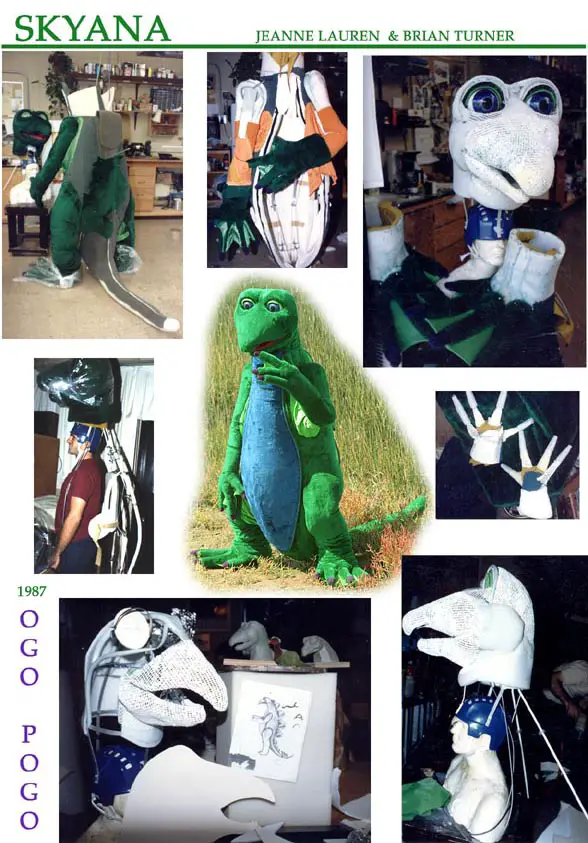
They won’t take care of it. So, I do see a couple of my pieces on display somewhere, like in an arts and craft museum or something like that. I envision that, but I haven’t figured that out yet. Um, where I could donate or where I would maybe circulate a few of these pieces on tour, people just to see them, because it’s a lost art.
I think a couple of my pieces, people would love to see them up close. They go, wow, look at this thing. It’s alive, but it’s just on display, but it looks like it’s alive. Cause I told you, I imbue life into these things. I imbue an animation into these characters.
Even Frosty the Snowman, it’s not like any costume you’ve ever seen. It’s not like anything you could just go online and find. I don’t think there’s many people who do what I do, who have done what I did, in terms of how I imbue them with life. They just come to life.
They’re alive. Just sitting there. And then you put somebody in them, it’s a whole other story. But I think I have a skill. I think I had or have a skill. And I think the pieces are so beautiful. Just from a craftsman’s standpoint, the fabric and the shape of them, and Brian Turner, my partner, who passed away, who built them with me, they’re just stunning pieces.
TFTC: I think it would be cool to see all that stuff in one place, like an exhibit of your own.
Jeanne Lauren: Well, thank you for bringing it all home for me.
TFTC: Okay. I appreciate you. Thank you Jeanne.
Share this:

Discover more from Tales From The Collection
Subscribe to get the latest posts sent to your email.