
Table of Contents
In June 2024, I had the privilege of conducting an interview with the talented illustrator and author Jeffrey Brown via mail correspondence. Known for his unique contributions to the Star Wars universe and his engaging graphic novels, Jeffrey shared his journey and creative insights with us. For those interested in learning more about fan mail and through-the-mail autograph collecting, be sure to visit our FAQ page.
About Jeffrey Brown
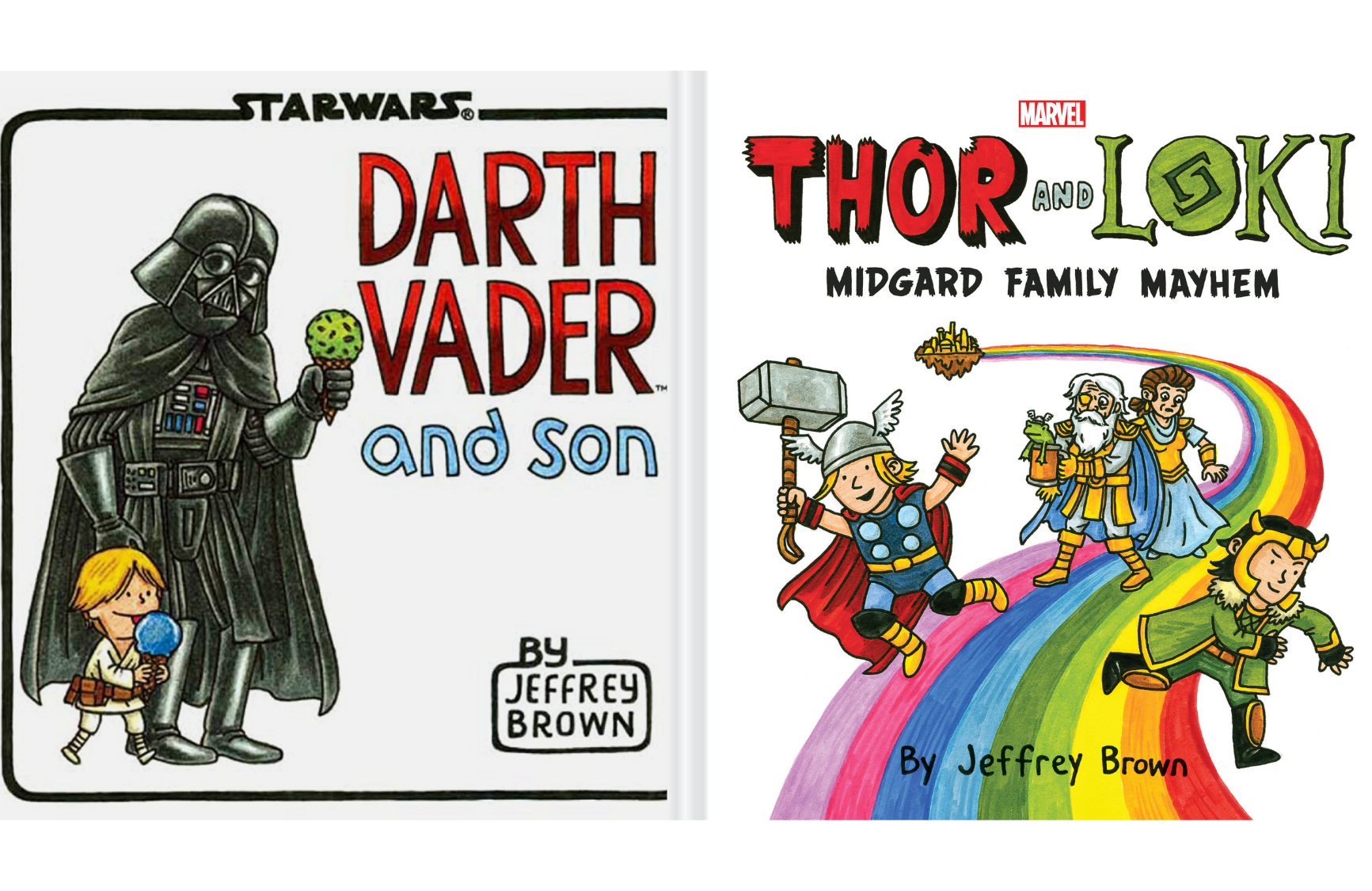
Jeffrey Brown is a renowned American cartoonist and author, celebrated for his distinctive style that blends humor with heartfelt storytelling. Born in 1975 in Grand Rapids, Michigan, Brown initially pursued fine arts and earned an MFA from the School of the Art Institute of Chicago. His shift from painting to creating autobiographical comics began with his critically acclaimed self-published book “Clumsy” in 2002.
Brown’s most notable works include the “Darth Vader and Son” series and the “Jedi Academy” series, which have captivated Star Wars fans around the world. His playful reimaginings of iconic characters and their everyday lives have made his books beloved additions to the Star Wars franchise. Beyond Star Wars, Brown has also created the “Lucy & Andy Neanderthal” series and several standalone graphic novels, showcasing his versatility and talent.
Throughout his career, Brown has received numerous accolades, including Eisner Awards for Best Humor Publication. His contributions extend beyond books; he has directed animated music videos and co-written feature films, solidifying his impact on the graphic novel genre and the broader artistic community. Brown continues to inspire with his innovative storytelling and dedication to his craft.
Jeffrey Brown Interview
1. Can you take us through your early inspirations and what initially drew you to the world of cartooning and comics?
Picture Books and Garfield, then X-Men superhero comics.
2. Your “Star Wars” parody books, such as “Darth Vader and Son,” combine humor with the iconic “Star Wars” universe. What sparked the idea to blend these two elements, and how did you approach Lucasfilm with your concept?
Google had the idea for a “Google Doodle” of how awkward it would be if Vader and Luke were in everyday life. I did sketches, but they decided not to use it, so I had my publisher Chronicle Books take it to LFL, and they liked it.
3. What challenges did you face in balancing your personal artistic style with the established lore and fan expectations of the “Star Wars” universe?
Biggest challenge is when Disney/Lucasfilm doesn’t get a joke, or won’t let a really good joke in because of the movies.
4. Beyond “Star Wars,” your work includes a variety of autobiographical comics. How does your approach differ when dealing with personal stories compared to working on a franchise like “Star Wars”?
With autobio I can do whatever I want. There’s far fewer restrictions—just have to be true to life.
5. How has your background and training in fine arts influenced your comic book storytelling and artistic style?
I’m a big fan of expressionism, and comic are especially good for humor and emotion.
6. In creating comics that appeal to both children and adults, what key elements do you focus on to make your stories accessible and engaging across different age groups?
I just wrote for myself, so I guess I’m a big kid.
7. Your transition from more adult-themed comics to child-friendly content marked a significant shift in your career. What motivated this shift, and how has it affected your creative process?
Having kids was the big factor, I self-edit more now.
8. Can you discuss a particular project or comic that you found particularly challenging to work on? What made it challenging, and how did you overcome those challenges?
The Mandalorian and child—had more layers of approval than any other book I’ve done.
9. The comic industry has evolved significantly with the rise of digital media. How do you see digital platforms impacting comic book creators today, and what are your thoughts on the future of comic publishing?
I let the publisher worry about that stuff and try to stay focused on telling stories.
Share this:

Discover more from Tales From The Collection
Subscribe to get the latest posts sent to your email.