Table of Contents
- How the Final Fantasy opportunity came about
- Personal history with Final Fantasy
- Working from a Wizards creative brief
- Communication with Square Enix
- Designing Magitek Infantry
- Capturing the Iron Giant
- Style vs. faithfulness
- Shifting between major franchises
- Drafts and evolving concepts
- Early career confidence
- The negative space series
- Staying creatively grounded
Introduction
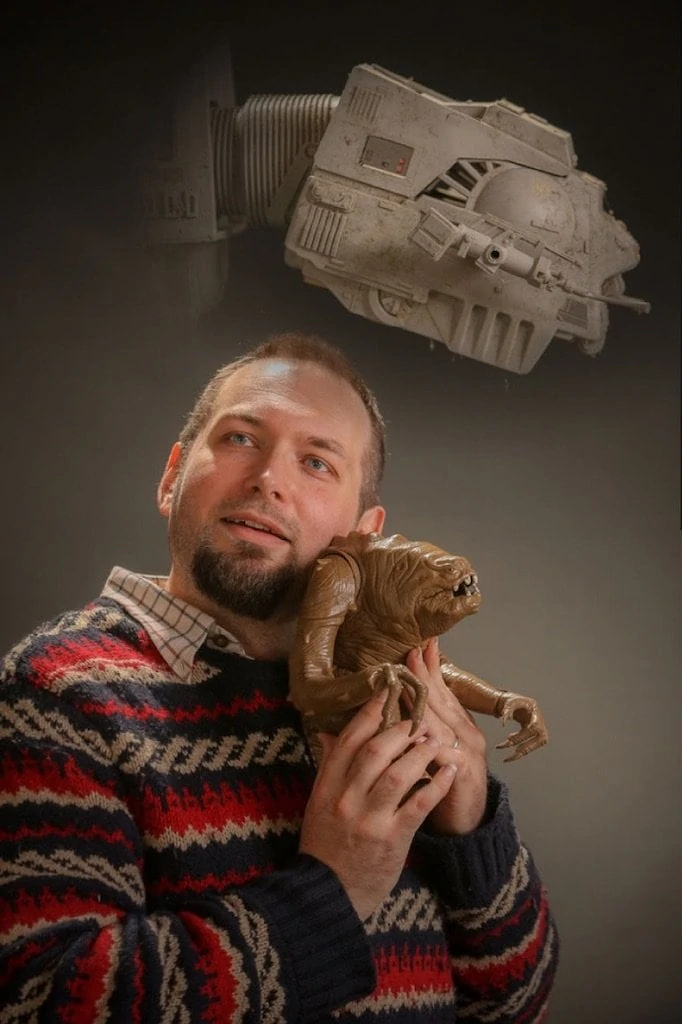
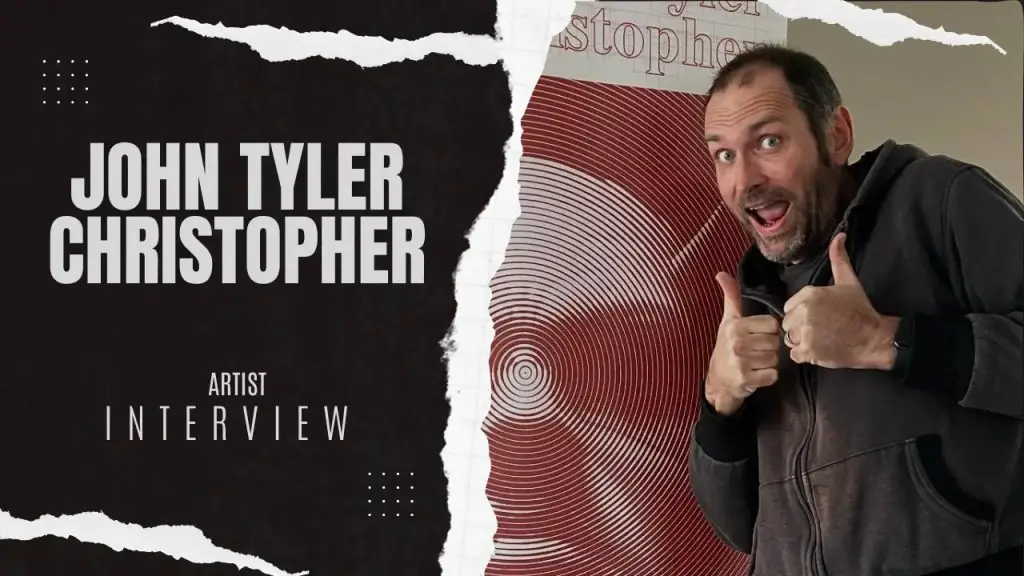
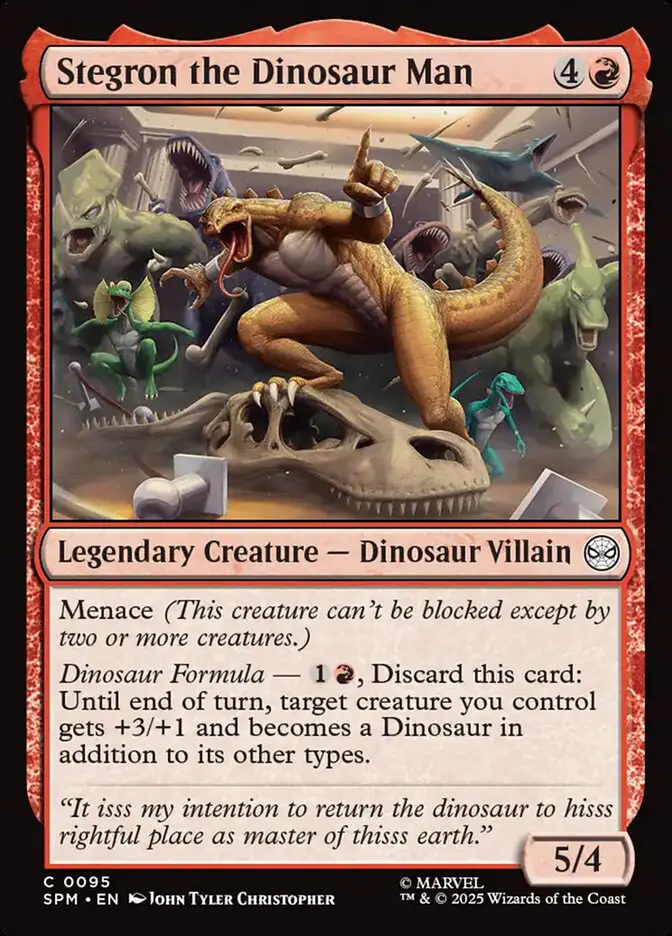
John Tyler Christopher is a Harvey Award-nominated illustrator whose work spans comics, collectibles, and licensed universes—most visibly through his distinctive Marvel cover work and his character illustrations for premium toy packaging. In recent years, his art has also appeared on Magic: The Gathering cards, bringing his bold composition and character-first approach into the MTG frame.
The following interview was conducted via mail correspondence in February of 2026. The questions were sent in writing, and John responded in handwritten form. His answers will be presented verbatim in the interview section below.
Interview
How did the opportunity to illustrate for the Final Fantasy Universes Beyond Magic set come about, and what drew you to take on the project?
JTC: I met Mike Turian 1 at a show in Boston. He liked my art and asked if I would be interested in painting for Magic. I’ve always loved the art of MTG and was honored!
The first project I did was Final Fantasy and as a long-time fan, I was stoked!
What was your personal familiarity or connection with the Final Fantasy series before working on this set—were there particular games, characters, or themes you resonated with?
JTC: I’ve played all the FF games and the few I never played growing up, I’ve now played as I’m going through the entire series right now. I’m trying to max out each game, and I’m currently on FF VI (which somehow is one I never played as a kid). I just finished the opera and am loving it so far!
I dig the old-school games and especially love IV and VII. I actually have the entire classic FF VII toy line, including Tiamat!
This current playthrough has made me really appreciate FF V and the job system, and IX for the characters.
When Wizards of the Coast assigns a card for illustration, what kind of creative brief or references are typically provided, especially for a crossover with a brand like Final Fantasy?
JTC: They were quite specific about which version to use. With some characters and monsters going back so many years, it was helpful to have a focused version to work from.
Were there any direct conversations or feedback loops with Square Enix during your design process, or was all communication routed through Wizards?
JTC: All the communication was done through Wizards.
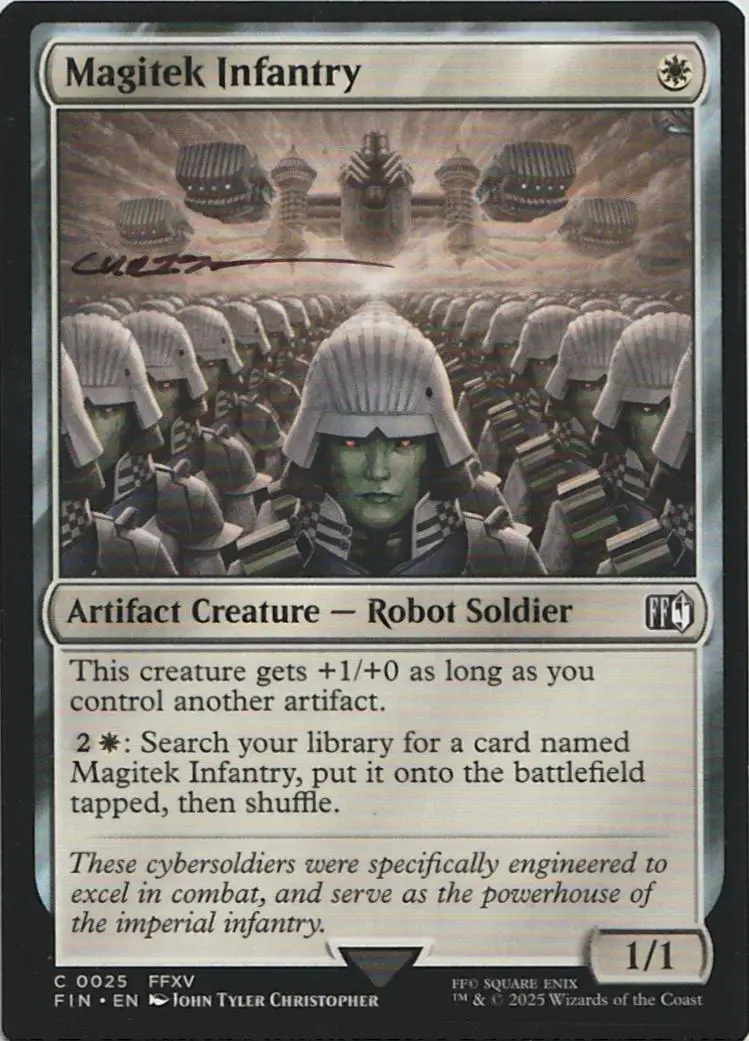
Let’s talk about Magitek Infantry—what specific references or inspirations guided your depiction of this iconic unit from the Final Fantasy VI world?
JTC: I actually focused on the XIV version, but since I’m now playing VI, I would have loved to have done the VI version. It would have been fun to have included the Magitek Armor and Kefka pontificating to the troops.
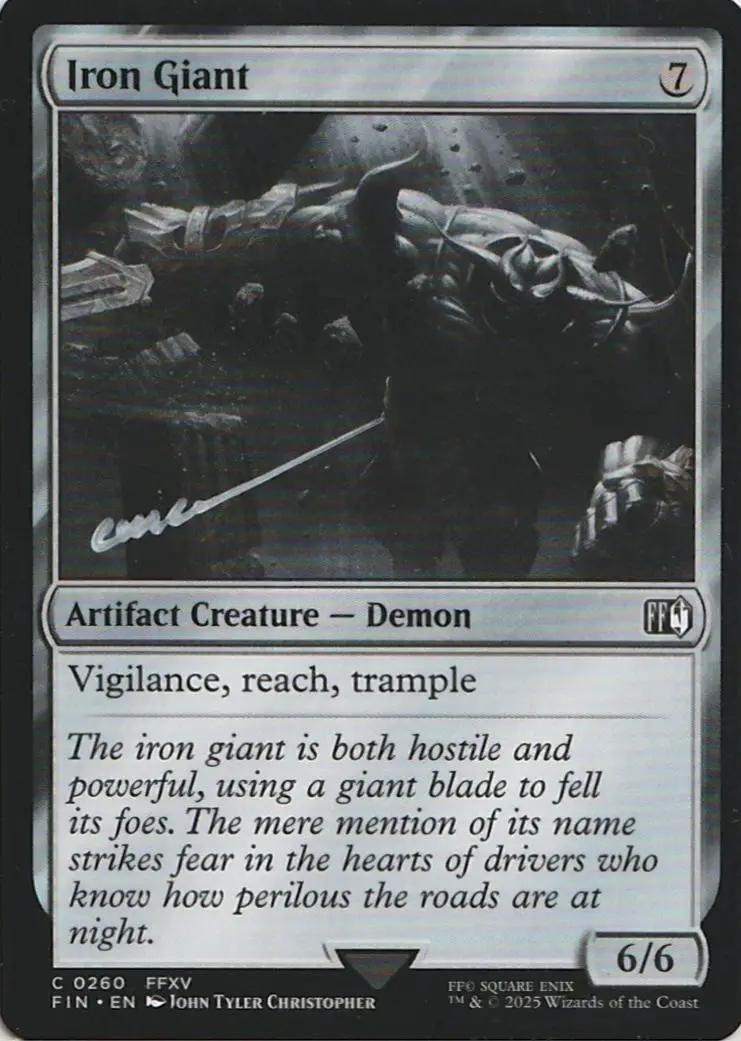
The Iron Giant is such a towering, mythic figure in the FF mythos. What were the artistic and compositional challenges in capturing its size, presence, and menace on a small Magic card canvas?
JTC: They are so wide! I’m used to working in comic book covers with a vertical frame, so the square format was a blessing.
Setting, lighting, and dust really helped in depicting the size and lumbering nature.
When designing cards like these, how much room do you have for stylistic interpretation versus staying faithful to the original Square Enix design aesthetic?
JTC: It varies. I wanted to maintain a MTG style, especially being my first set. I don’t want to rock the boat too much. I would have loved to have incorporated some Amano 2 into my style!
You’ve worked across major franchises—from Marvel to Star Wars to Magic. How do you mentally shift gears when switching between those very different visual and narrative worlds?
JTC: The easiest part for me is that I’m a lifelong fan of all these properties, so I just try and capture what they and the characters, themes, and scenes mean to me.
Did you experiment with multiple drafts or alternate compositions for either of these cards? Can you describe how your initial concept may have evolved?
JTC: Since both are so iconic, I wanted to capture the essence of them. The Iron Giant was all about intimidation through size, while the Magitek Infantry is all about mindless, overwhelming numbers.
One of my early versions of the Magitek Infantry had a flood of them jumping out of a drop ship. It was a bit too “actiony,” and I think the final version better conveys the dread of their imperial might.
Looking back, was there a particular moment or project in your early career that gave you the confidence to fully commit to illustration professionally?
JTC: It’s literally all I’ve ever wanted to do.
Funny personal story, I actually met my wife when I had her model for a Queens Tarot drawing I was working on back in the 90s!
Your variant comic covers, especially your “negative space” series, have become iconic. How did that stylistic approach develop, and what inspires you to revisit or evolve it?
JTC: I even named it, so the negative space area is my way of “issuing more by saying less.” I started that style in high school. I always try to evolve and push myself. I’ve become really into Brutalist architecture, 3 so my newer tone pieces are my way of pushing myself in uncomfortable directions.
As someone whose art is so widely consumed by fans across mediums, how do you stay creatively grounded and keep challenging yourself with each new project?
JTC: My motto is “innovate, don’t imitate.” I love art and strive to give people what they want, while also exploring new ideas and nurturing them until I can realize them.
I try to find inspiration from art outside of traditional visual media—music, cuisine, architecture, etc. It helps me find paths that aren’t as well trodden as looking at just the best of my particular field.
Footnotes
- Mike Turian: a Hall of Fame professional Magic: The Gathering player, known for winning Pro Tour New York in 2000 and two Grand Prix events. After his playing career, he joined Wizards of the Coast, where he worked in R&D, Organized Play, and later as the Magic Duels Business Manager. In 2017, he transitioned to the product design team, contributing to the development of Magic: The Gathering. Back to interview
- Yoshitaka Amano: a renowned Japanese artist known for his distinctive illustrations for the Final Fantasy video game series. His highly stylized, ethereal designs have become iconic in the gaming industry. Back to interview
- Brutalist Architecture: an architectural style known for its bold, raw, and often massive forms, characterized by exposed concrete and geometric shapes. It has influenced many art forms, including modern illustration. Back to interview
Share this:

Discover more from Tales From The Collection
Subscribe to get the latest posts sent to your email.