Table of Contents
- Introduction
- Spotlight on Sheena Monk
- Interview
- 1. Entering professional racing later than most drivers
- 2. Learning curve at speed and adapting across platforms
- 3. Recovery after an on-track accident
- 4. Street circuits and Long Beach lessons
- 5. Engineer-driver communication in GT3
- 6. Co-driver chemistry and endurance trust
- 7. Switching GT machinery and cockpit differences
- 8. Inside a race weekend
- 9. A defining race under adversity
- 10. Barriers for women in motorsport
- 11. Preparation between events
- 12. What a complete career chapter looks like
Introduction
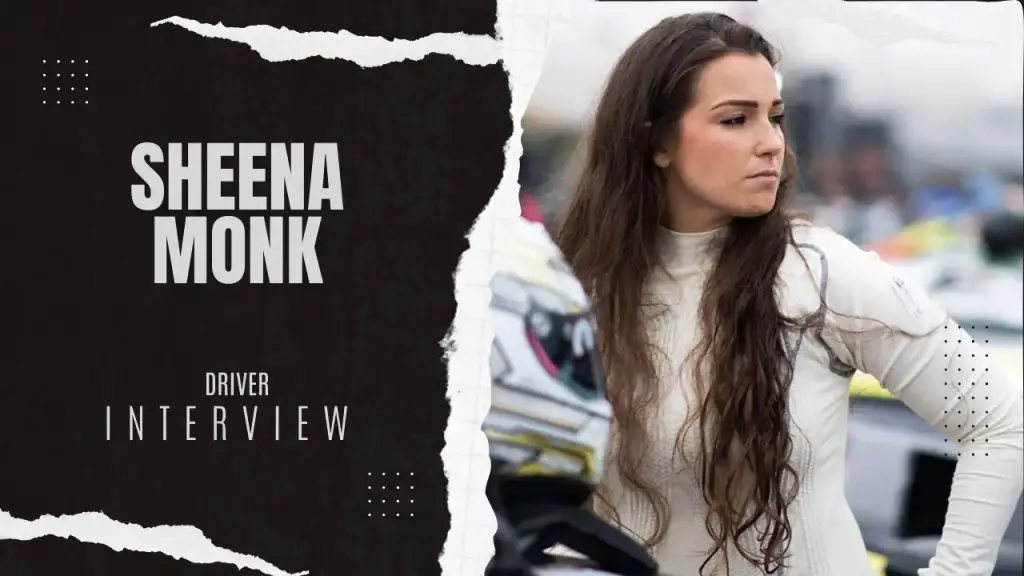
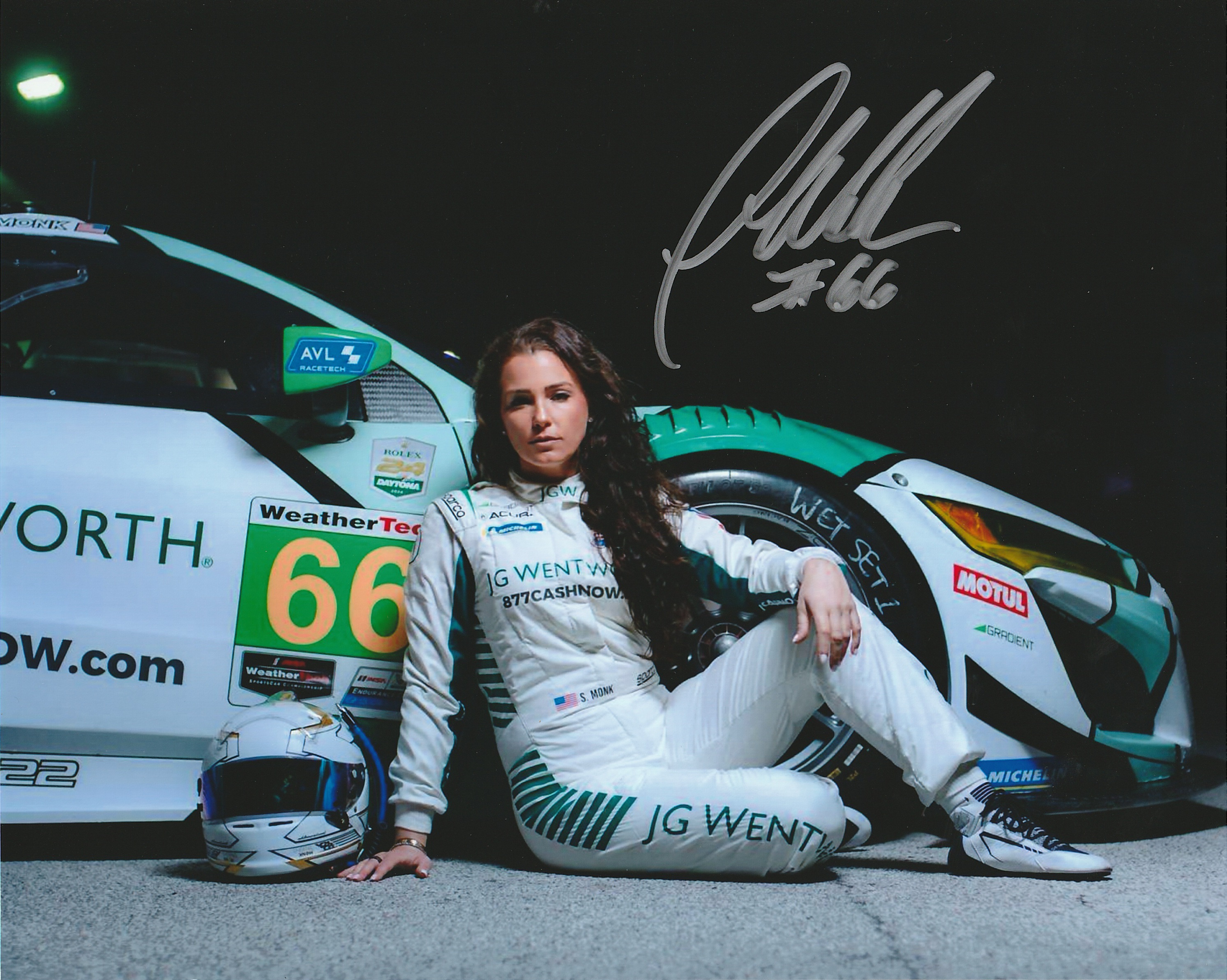
Sheena Monk is a professional sports car driver whose career has spanned Lamborghini Super Trofeo, GT4 competition, and GT3 endurance racing. Entering professional racing later than many of her peers, Monk built her résumé through persistence, technical growth, and a willingness to adapt across platforms and manufacturers.
This interview was conducted through mail correspondence in February 2026. Questions were sent in writing, and Sheena responded by hand. Her answers are presented verbatim in the interview section below.
Spotlight on Sheena Monk
From Super Trofeo to GT Platforms
Monk began her professional journey in Lamborghini Super Trofeo, a single-make championship known for demanding car control and aggressive sprint racing. That early experience formed the foundation of her development before she transitioned into GT4 machinery, including programs with McLaren, Toyota Supra GT4, and Ford Mustang GT4 platforms. Each step required recalibration—braking feel, electronic driver aids, weight balance, and traffic management in multi-class environments.
Climbing Into GT3 Competition
Moving into GT3 marked another significant evolution. Competing in higher-downforce, more complex cars such as Acura and Ferrari GT3 entries demands refined communication with engineers, disciplined tire management, and confidence in braking zones while managing turbulent air in traffic. The transition highlights both technical growth and psychological resilience.
Endurance Racing Mindset
Endurance competition adds another layer: co-driver chemistry, data-driven collaboration, and the ability to hand over a car mid-race while trusting the larger team strategy. Monk has competed in major North American endurance events, with ambitions that extend toward globally recognized races such as the Rolex 24 at Daytona, the 12 Hours of Sebring, and potentially Le Mans and Spa.
Advocacy and Pathways for Women
In a discipline still heavily male-dominated, Monk has spoken openly about funding realities, brand perceptions, and the need to create earlier entry points for girls in karting. Beyond personal milestones, she has expressed interest in helping build sustainable pathways for young drivers—particularly those transitioning from karting to cars, where financial barriers often become decisive.
Interview
I’ve always loved cars, but the racing obsession didn’t come until much later. My dad raced motorcycles and asked me to race midgets as a kid, but unfortunately I wasn’t interested. In 2017 I was at a charity track event and someone asked if I had ever considered racing. By that point, it was on my radar, but the barriers to entry are high. This individual stepped in and helped me get licensed in a program Lamborghine was running. I had recently left a job around that time, so I started focusing my attention on racing.
I feel like my racing developed like a novel — in chapters. The Super Trofeo is tough to drive and taught me car control. The move to GT4 in the McLaren had too much computer intervention and driver aids, but was beneficial because I could focus on race craft and traffic management for my first true experience with multi class racing. The Supra GT4 was shortlived (teammate totaled it), but the short stint was my first taste at rolling a lot of speed at the middle of the corner. Shortly after, the Mustang GT4 taught me to get up on the wheel and be aggressive, but to manage more oversteer. Entering GT3 was unexpected in a way; the Acura forced me to really fight in the braking zones while managing a car that was challenging through the corners in traffic (tough to follow closely in turbulent air). The Ferrare GT3 challenged me to adopt a different braking style and roll more speed in the corners. I’m still learning the Mustang GT3, but I would say my biggest learning will be tire management.
I drove a Trofeo again about 3 months after the crash and I was still very ensured. I did it in an extremely safe environment, not with any focus on pace. It was simply to get back on the horse again. I was still nervous for the races almost all year long once I went back, but I forced myself to push through the doubt. Trust came with time; there was no magical thing that changed overnight. Emotions.
I fell in love with Long Beach right away. In a strange way, the walls help me visually to find the limit. I went into my first race there with too much caution because people around me were really focused on me staying clean. In my second trip there, I felt much more comfortable pushing the risk level, especially since we started at the back from an engine change. Long Beach ultimately commands respect. I’ve seen races end in upset and competitors get injured, so you must stay extremely focused.
In GT3, the relationship is super important with the engineers. Luckily, I would say right now I’m surrounded by the most talented group of people to date. Sometimes personalities can affect the communication. I’m a bit analytical and numbers driven, but not to the extent of the engineers. For the most part, I can get to describing something and they combine it with actual car data. I also take notes every session about the car’s behavior in each corner.
I’ve been friends with co-drivers and also driven with people I’ve never met. Ultimately, we all want the same thing, so you have to trust they are in an “endurance mindset.” You naturally build comraderie in the time amongst the team, but again, it comes down to personalities and how you gel; we’re there to pursue results. We won’t discuss much during the race, maybe one sentence just before the change and relayed through the engineer. We do talk sometimes during driver changes in practice.
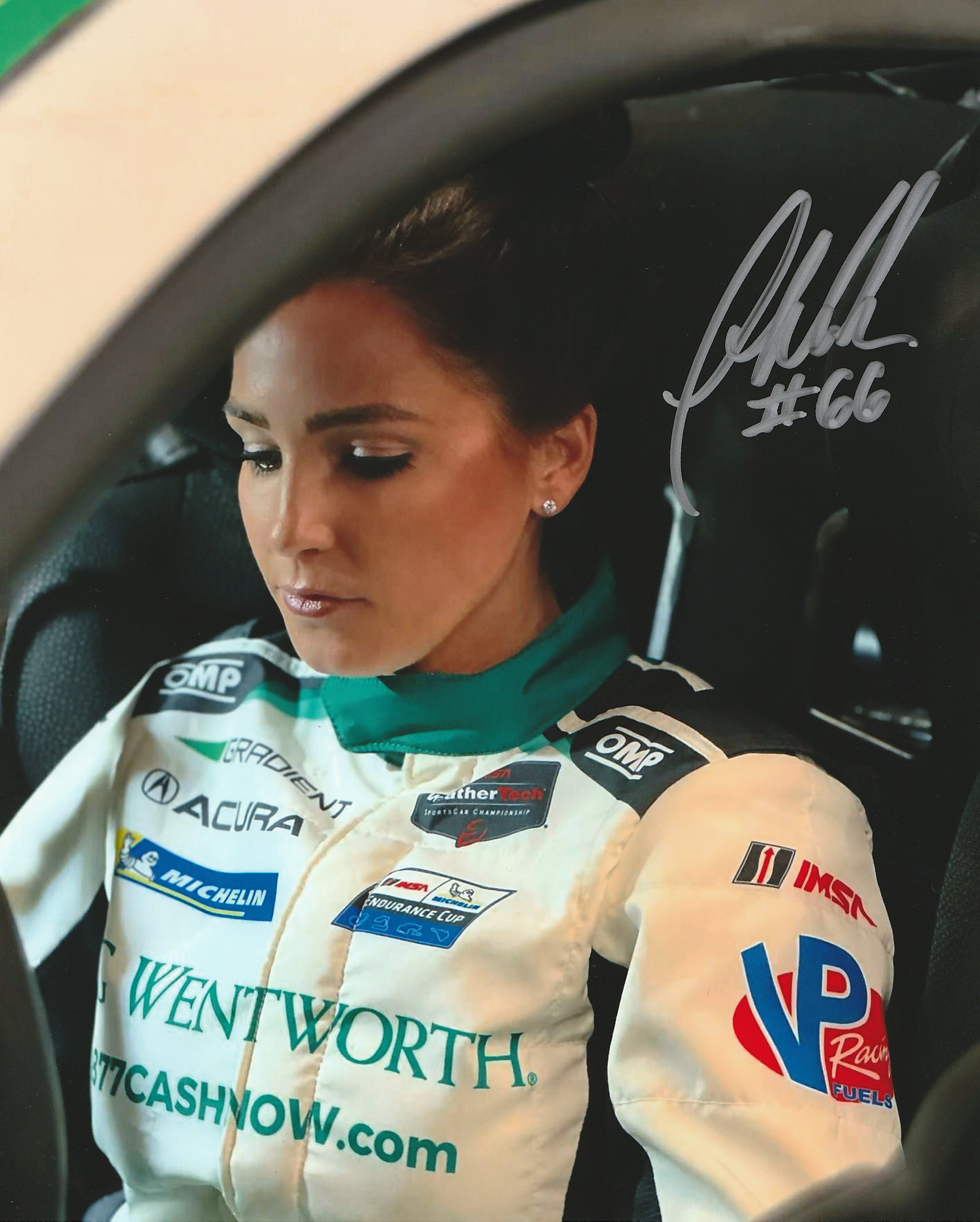
Visibility can be tough because I’m usually smaller than my co-drivers. This year, it took a little adjusting having the engine in the front, which also changes the feeling on the brakes. Overall, the car is just bigger. It’s always a challenge to learn the buttons and how each manufacturer approaches their settings for driver aids (traction controls, throttle maps, etc.). Frankly, they’re all quite different in how they need to be driven.
Race mornings are frantic for me and time feels like it’s moving at 3x. Once the national anthem plays, I start locking in and I’m finally calm once I get in the car.
Horrible race and didn’t get any notable result, but CTMP 2024 I got hit and spun on the opening lap, struggled to get the car restarted and in gear. Finally did and I was probably 25+ seconds off the back of the field. No idea how, but under full green flag, I eventually caught the back of the pack. I even at one point told the team not to talk to me because I was in such deep focus. It showed me I could dig deep in adversity.
The biggest barrier is funding, but that doesn’t pick genders. The misconception, though, is that it’s easier for female drivers to get sponsors, and I think the opposite is sadly true. I don’t think we are taken as seriously sometimes by brands and that their appetite for that kind of marketing is in the past. I’ve been fortunate to have long term support, but nothing is forever. In order to get more women in the sport, there has to be a much bigger push to start girls in karting from a young age, but there is also more opportunity in the sport than driving.
All of the above. I have a sim at home and I like to box for training.
I’d like to win major races like Daytona and Sebring. I’d also like to win the Bronze Award for an entry to race Le Mans. Outside my “normal” racing in the States, I would enjoy the 24 Hours of Spa, Bathurst, and the Nurburgring. Establishing a sustainable path for other women, specifically ones trying to transition from karts to cars, would be rewarding. Often times that is the threshold where families can no longer support the next step because the costs are so high.
Share this:

Discover more from Tales From The Collection
Subscribe to get the latest posts sent to your email.